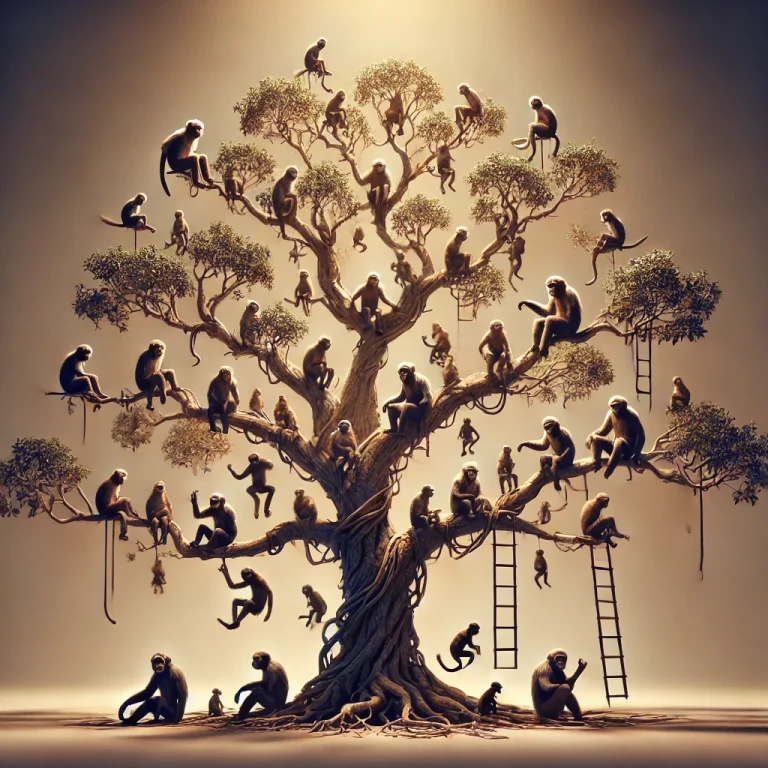
Reimagining Creativity and Expertise in the Age of Superintelligence Based on Points 4–6 of the Six Shifts in the Times of India Interview with Sam Altman
As artificial intelligence (AI) evolves toward superintelligence, the nature of learning, work, and human contribution is undergoing profound change. In a recent interview, OpenAI CEO Sam Altman suggested that in the near future, “intelligence may cost no more than electricity” (Times of India, 2025). His remark encapsulates the paradigm shift humanity faces—where access to cognitive power becomes ubiquitous, forcing us to redefine creativity, expertise, and learning itself. Among the six major shifts Altman identifies, points 4 to 6 speak most directly to the future of human ingenuity and knowledge.
These shifts challenge how we understand originality, craftsmanship, and authority. Let us explore them in depth with a special focus on the implications for countries like Bangladesh.
Creativity Gets a New Meaning
“AI doesn’t kill creativity; it makes room for a new kind—one where direction, taste, and bold vision matter more than manual skill.” — Sam Altman, 2025
The rise of generative AI is transforming the very definition of creativity. No longer confined to human imagination alone, creativity now includes co-creation with machines. AI tools can compose symphonies, write novels, generate photorealistic images, and even produce scientific hypotheses. Yet, this expansion of creative possibility also forces a critical question: what does originality mean when machines can remix all prior knowledge in milliseconds?
Altman notes that “creativity will move from the act of generating to the act of curating, directing, and imagining new contexts” (Times of India, 2025). In other words, the value lies not in producing outputs from scratch but in intelligently shaping what machines can produce.
In the fashion industry, Bangladeshi designer brands like Aranya or Bibiana could use AI to generate hundreds of fabric patterns inspired by traditional Nakshi Kantha motifs. The role of the human designer becomes one of selection and cultural translation—choosing what best represents local identity while appealing to global aesthetics.
Schools and universities must teach students how to direct creativity through prompt engineering, aesthetic judgment, and contextual understanding. In Dhaka’s tech-forward schools like Scholars Academy or NSU’s CSE department, incorporating AI-based art and music courses would help students learn the language of collaboration with machines.
Expertise Will Look Different
“The future expert is part analyst, part ethicist, part communicator—and wholly adaptable.” — Harvard Business Review, 2024
Expertise, long built on years of education, experience, and specialization, is being disrupted by instant access to knowledge and tools. Altman foresees a world where many forms of expertise become democratized: “The domain expert is still needed, but now the bottleneck is not what you know—it’s what you do with what you know” (Times of India, 2025).
This means that being an expert no longer just means knowing more than others. It may mean asking better questions, connecting ideas across fields, or interpreting outputs responsibly. AI can provide answers—but humans must frame the problems and ensure ethical use.
A young agritech entrepreneur in Rangpur might not be an agronomist but, with AI, can access predictive models for crop yields based on soil and weather data. Her expertise lies in integrating AI suggestions with local knowledge, understanding farmers’ behavior, and deploying the right interventions.
This shift opens up new avenues for youth in rural areas, where access to traditional expert training is limited. With localized AI models trained in Bangla and on regional datasets, smart village initiatives can empower a new kind of local expert—one who uses AI fluency to serve the community.
Mastery Will Be Redefined
“True mastery in the age of superintelligence is the mastery of context, ethics, and collaboration—not the rote command of data.” — Amy Webb, 2024
In a world where AI can instantly replicate outputs that previously took years of training—like coding, translating, or designing—mastery itself is being redefined. It’s no longer just about deep, narrow knowledge; it’s about the ability to work effectively with intelligent systems and to build meta-skills such as problem framing, system design, and value alignment.
Altman stresses that “being exceptional at something won’t always mean you’re the fastest or the most knowledgeable—but the most human in applying and guiding intelligence” (Times of India, 2025).
A master teacher in Chattogram may not need to memorize curriculum frameworks but must now become skilled in curating AI-generated learning modules, mentoring students in critical thinking, and managing digital classrooms infused with AI tutors.
Bangladesh’s education policy must embrace this redefinition. National Curriculum and Textbook Board (NCTB) reforms could prioritize design thinking, digital collaboration, and ethics in automation as core competencies by 2030.
As Altman reminds us, “We’re not just making smarter machines; we’re making smarter humans—if we choose to.” The challenge is not to compete with AI, but to complement it.
For Bangladesh, this moment is a golden opportunity. By embedding AI fluency, ethical reasoning, and human-centered design in education and governance, we can leapfrog into a future where every village innovator, urban planner, or artist becomes a superintelligent collaborator.
References
Altman, S. (2025). What will learning look like in the age of superintelligence? Times of India. Available at: https://share.google/dcpqVKcyWAWfSJ585 [Accessed 4 July 2025].
Harvard Business Review. (2024). Artificial Intelligence Library, 2nd Edition. Boston: Harvard Business Publishing.
Webb, A. (2024). The Signals Are Talking: Why Today’s Fringe Is Tomorrow’s Mainstream. New York: PublicAffairs.
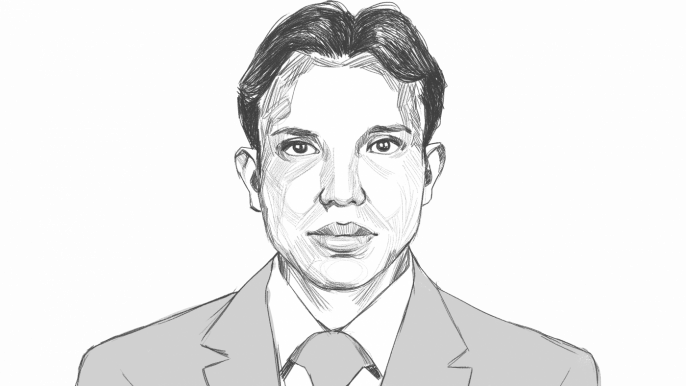
Mazharul Islam,
Corporate Legal Practitioner,
Member of Harvard Business Review Advisory Council.
He can be reached at mazhar@insightez.com