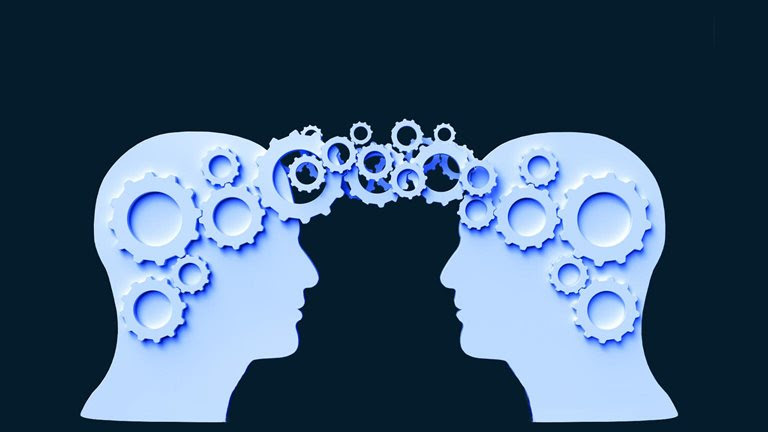
Shifts in Learning in the Age of Superintelligence
As artificial intelligence (AI) transitions into the era of superintelligence—systems capable of outperforming humans in nearly all cognitive tasks—the way we learn, teach, and apply knowledge is undergoing radical transformation. Sam Altman, CEO of OpenAI, recently remarked, “The cost of intelligence may soon be no more than the cost of electricity” (Times of India, 2025). This provocative statement encapsulates a seismic shift: intelligence is becoming a utility. As this unfolds, educational systems across the globe—including in countries like Bangladesh—must evolve to remain relevant and equitable.
This chapter outlines six transformative shifts that will redefine learning in the age of superintelligence.
1. From Knowledge Transfer to Curiosity Activation
Traditional learning models emphasize the one-way transmission of knowledge from teacher to student. However, with generative AI tools capable of instant knowledge retrieval and explanation, the focus must shift to cultivating curiosity and critical inquiry.
Example: Rather than memorizing Newton’s laws, students will engage AI to simulate hypothetical physics scenarios and ask, “What if gravity reversed in Dhaka for 30 seconds?”—promoting deeper understanding through experimentation.
Bangladesh Perspective: The government’s Access to Information (a2i) programme can integrate AI-powered curiosity platforms into rural schools, transforming rote learning into inquiry-based exploration.
Quote: “Education should not be about loading information into students’ minds, but igniting the fire to ask ‘why’ and ‘what if’ in a world where machines can tell you ‘how’” — Dr. Rumman Chowdhury, AI ethicist.
2. From Standardized Curricula to Personalized Pathways
In today’s world, education follows a uniform curriculum. Superintelligent systems, however, will enable hyper-personalized learning trajectories, adapting in real-time to each learner’s pace, preferences, strengths, and weaknesses.
Case Study: Squirrel AI in China demonstrated that students using AI-driven personalized tutoring improved learning outcomes by 50–60% compared to traditional classrooms (HolonIQ, 2023).
Bangladesh Potential: EdTech startups like Shikho and 10 Minute School could deploy LLM-based tutors trained on the national curriculum to create tailored learning paths even in underserved districts.
Quote: “AI doesn’t replace teachers—it makes every learner feel like they have one all to themselves” — Andreas Schleicher, OECD Director of Education.
3. From Memorization to Meta-Learning (Learning How to Learn)
In the age of superintelligence, facts are cheap and ubiquitous. What becomes valuable is meta-learning: the ability to learn, unlearn, and relearn in response to rapid change.
Example: A university student studying marketing may ask an AI to simulate brand behavior across three economic crises to test strategic approaches, focusing not on static answers but on dynamic adaptation.
Bangladesh Relevance: The Fourth Industrial Revolution (4IR) curriculum of Bangladesh Technical Education Board can embed meta-learning through project-based AI labs and collaborative knowledge creation using agentic AI tools.
Quote: “The illiterate of the 21st century won’t be those who can’t read or write, but those who can’t learn, unlearn, and relearn” — Alvin Toffler.
4. From Authority-Based Learning to Dialogue-Based Co-Learning
Traditional education enforces a hierarchy where teachers are sole authorities. Superintelligent systems will facilitate dialogic learning, where students co-learn with AI and human mentors in collaborative knowledge ecosystems.
Example: In AI-supported classrooms, a student might challenge the explanation of a history lesson, leading to a debate between AI, peer students, and educators—refining collective understanding.
Bangladesh Context: Madrasahs and general education systems can introduce AI-powered debate and tafsir simulators that allow students to explore religious and historical interpretations collaboratively, respecting cultural values while embracing new inquiry models.
Quote: “Superintelligent systems won’t just answer questions—they’ll ask better ones” — Sam Altman (Times of India, 2025).
5. From Degree-Centric to Capability-Centric Validation
As AI makes skill acquisition faster and more autonomous, the value of degrees will decline in favor of capability signals—real-world problem solving, creative reasoning, ethical AI use, and human-machine collaboration.
Example: Instead of a Bachelor’s in Computer Science, an AI-savvy youth from Chittagong might demonstrate competency through a blockchain-verified portfolio of 12 generative AI projects solving local problems (e.g., cyclone prediction, water logging).
Case Study: Google and IBM have already stopped requiring degrees for many tech roles, emphasizing demonstrated skills over academic pedigree (World Economic Forum, 2024).
Bangladesh Relevance: Universities like BUET and NSU can partner with government to create AI-driven micro-credentialing platforms recognized by employers, shifting focus from certificate to capability.
6. From Human-Only Intelligence to Human–AI Synergy
Perhaps the most profound shift is the integration of human intelligence with artificial intelligence. Learning will no longer be a solitary human activity but a symbiotic collaboration between humans and AI agents—creating what some call “augmented intelligence.”
Example: A social worker in Khulna uses an AI assistant to analyze data from field surveys, generate insights about local poverty dynamics, and simulate policy options for intervention—all in Bangla.
Global Inspiration: Estonia’s AI-powered teacher assistants are already augmenting classroom management, grading, and individualized feedback, freeing human teachers to focus on creativity and empathy (OECD, 2023).
Bangladesh Future: The Ministry of Education and ICT Division can build a National AI Learning Companion integrated into school systems, tailored to local languages and contexts, ensuring equitable access to superintelligent assistance.
Quote: “The future belongs to those who don’t compete with AI, but collaborate with it to go further, faster, and deeper” — Fei-Fei Li, Stanford University.
Conclusion
As superintelligence lowers the cost of cognition and raises the ceiling of potential, learning must evolve from static consumption to dynamic co-creation. For Bangladesh—a nation with a youthful population and strong digital ambition—this is not just a transformation to anticipate but an opportunity to lead. The path forward is not about replacing teachers or textbooks, but about reimagining education to prepare minds for an intelligence-rich, complexity-filled, ethically fraught, and opportunity-laden world.
References
HolonIQ (2023). Squirrel AI Case Study: The Future of Adaptive Learning. [online] Available at: https://www.holoniq.com.
OECD (2023). AI and the Future of Education: Teaching in the Age of Artificial Intelligence. Paris: OECD Publishing.
Times of India (2025). Sam Altman: Intelligence May Soon Cost No More Than Electricity. [online] Available at: https://share.google/dcpqVKcyWAWfSJ585.
Toffler, A. (1970). Future Shock. New York: Random House.
World Economic Forum (2024). The Future of Jobs Report 2024. Geneva: WEF.

Mazharul Islam,
Corporate Legal Practitioner,
Member of Harvard Business Review Advisory Council.
He can be reached at mazhar@insightez.com