Learning in the Age of Superintelligence: What Happens When Intelligence Becomes as Cheap as Electricity?
In a world increasingly shaped by artificial intelligence, Sam Altman—the CEO of OpenAI and a leading voice in AI development—recently made a bold prediction: “In the not-too-distant future, intelligence will cost no more than electricity” (Times of India, 2025). This profound assertion invites us to rethink not just machines, but the very nature of learning, education, and human potential in the era of superintelligence.
What will learning look like when access to vast stores of knowledge, reasoning, and creativity is effectively free and instantaneous? How should societies, especially countries like Bangladesh, prepare for this transformation?
1. The End of Scarcity in Knowledge Access
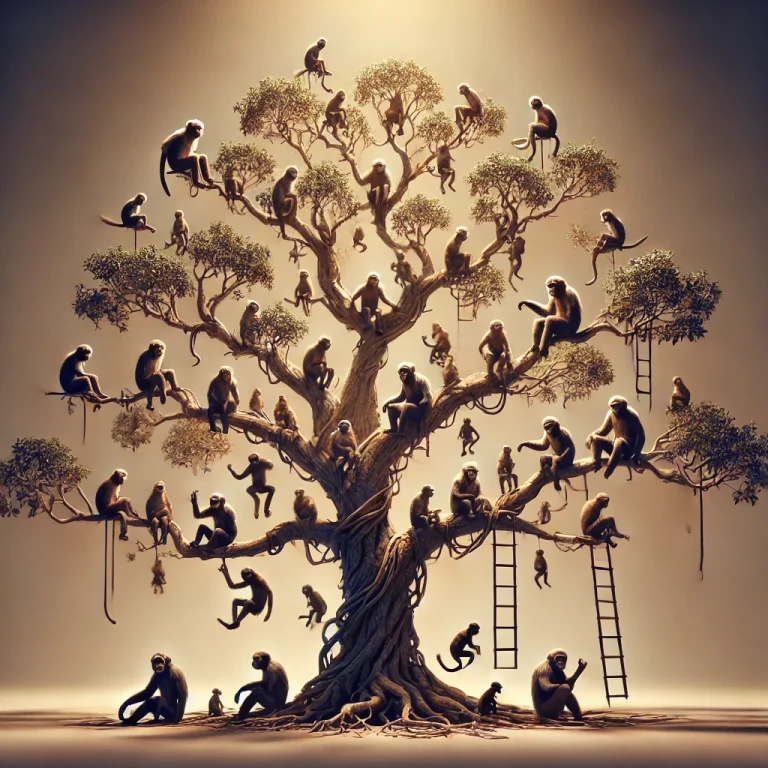
Traditionally, learning has been a slow, cumulative process—bound by the availability of teachers, infrastructure, and time. But superintelligence disrupts that model. When anyone can access the world’s best tutor, translator, analyst, or creative partner through an AI interface at the cost of running a lightbulb, knowledge becomes ubiquitous.
“If we can deploy AI responsibly, it has the potential to create the greatest leap in learning equity the world has ever seen,” notes Altman (Times of India, 2025).
Case Study: Khan Academy’s AI Tutor
Khan Academy, in partnership with OpenAI, introduced Khanmigo, an AI-powered tutor that adapts to each student’s level, provides feedback in real-time, and simulates Socratic questioning (Khan Academy, 2024). Early pilots in U.S. schools showed a 40% improvement in math problem-solving ability and a 20% increase in student engagement.
Such tools, when localized in Bangla and deployed through government platforms like “Shikkha Batayon” or NGOs like BRAC, could bridge the rural-urban education gap in Bangladesh.
2. The Redefinition of the Role of Teachers
In the age of superintelligence, teachers are no longer the gatekeepers of content—they become facilitators of curiosity, emotional intelligence, and ethical thinking.
According to Harvard professor Jal Mehta, “The schools of the future won’t just teach facts—they’ll teach students how to think, empathize, and work alongside AI” (Mehta, 2023).
In Bangladesh, this shift is already beginning. Initiatives under the Access to Information (a2i) program have begun training teachers in digital facilitation and blended learning. Integrating AI copilots into classrooms could free teachers from rote instruction and allow them to focus on mentoring and values-based education.
3. Hyper-Personalized Learning Paths
Superintelligent systems will enable students to learn at their own pace, in their own language, and with content adapted to their interests. A child in Khulna could be learning quantum physics through interactive Bangla visual modules, while a student in Rajshahi masters creative writing through AI-guided storytelling.
As Andreas Schleicher of OECD suggests, “AI can personalize learning at a scale and precision that humans alone cannot achieve” (Schleicher, 2024).
Case Study: Squirrel AI in China
Squirrel AI, a Chinese ed-tech company, uses advanced algorithms to identify and close learning gaps for each student. In a trial across 10 cities, students using the AI system improved their performance by 27% over those in traditional classrooms (Squirrel AI, 2023).
Bangladesh could replicate this success by integrating AI learning assistants into platforms like “Muktopaath” and deploying them across its 500+ upazilas.
4. Learning for the Human-AI Partnership Economy
As AI automates routine tasks, the future of work will demand different human capabilities: critical thinking, collaboration, creativity, and ethical reasoning. The purpose of education must shift from fact acquisition to preparing learners to partner with intelligent systems.
“We’ll need to educate people not just to use AI, but to supervise, challenge, and work alongside it. That’s a very different kind of literacy,” writes Fei-Fei Li, Stanford AI researcher (Li, 2024).
In Bangladesh, training institutes like the National Skills Development Authority (NSDA) must urgently update curricula to include AI ethics, prompt engineering, and data fluency. Polytechnics and madrasas alike should be included in this re-skilling agenda.
5. Moral and Cognitive Risks of Outsourcing Thought
When intelligence becomes commodified, there’s a risk that human beings may become passive consumers of thought, outsourcing curiosity, problem-solving, and even moral reasoning to machines.
Historian Yuval Noah Harari warns: “When AI knows you better than you know yourself, learning becomes less about growth and more about algorithmic control” (Harari, 2023).
To prevent cognitive dependency, education must cultivate critical resistance—the ability to interrogate AI output, recognize bias, and retain independent judgment. This is particularly crucial in societies like Bangladesh where misinformation and social bias can be amplified through poorly regulated tech use.
6. Learning Equity: A Unique Opportunity for Bangladesh
In a country where 17.4 million children still lack internet access at home (UNICEF, 2023), superintelligence may seem a distant dream. But mobile-first AI learning tools and offline-capable systems can leapfrog infrastructure barriers.
If deployed equitably, AI has the power to eliminate the accident of birth as a determinant of learning outcomes.
As Altman reflects, “Superintelligence can be the great equalizer—or the great divider. The choice is ours.” (Times of India, 2025)
To choose the first path, Bangladesh must craft a National AI-in-Education Framework that includes:
Localization of AI tools in Bangla
Public-private partnerships for AI-powered school systems
Teacher re-skilling and AI ethics integration
A digital equity fund for device and access inclusion
Conclusion: From Literacy to ‘Intelligence Fluency’
In this new era, the definition of literacy itself will evolve. It will no longer be enough to read and write; one must learn how to learn, unlearn, and co-think with intelligent machines.
Bangladesh has the opportunity to reimagine its learning ecosystem—not by copying the West, but by leapfrogging with intention, equity, and a bold national vision.
Superintelligence may be cheap—but wisdom will still need to be earned.
References (Harvard Style)
Altman, S. (2025). Intelligence Will Soon Cost No More Than Electricity. Times of India. Available at: https://share.google/dcpqVKcyWAWfSJ585
Fei-Fei, L. (2024). Human-Centered AI: Building the Partnership Economy. Stanford Human-Centered AI Institute.
Harari, Y.N. (2023). AI and the Future of Our Species. The Economist. Available at: https://www.economist.com
Khan Academy. (2024). Introducing Khanmigo: AI-Powered Tutor. Available at: https://www.khanacademy.org/khan-labs
Mehta, J. (2023). In Search of Deeper Learning. Harvard Education Press.
OECD. (2024). AI and the Future of Education: Personalisation at Scale. OECD Publishing. Available at: https://www.oecd.org
Squirrel AI. (2023). Case Studies and Results. Available at: https://www.squirrelai.com
UNICEF. (2023). Learning During COVID-19 in South Asia. Available at: https://www.unicef.org

Mazharul Islam,
Corporate Legal Practitioner,
Member of Harvard Business Review Advisory Council.
He can be reached at mazhar@insightez.com