Essence of Ramadan
Hadith regarding Ramadan
Allah’s Messenger, peace and blessings upon him, said: “Man sama Ramadana imanan wa’htisaban gufira lahu ma takaddama min zanbihi.” ‘Whoever performs siam in the whole month of Ramadan out of sincere Faith and hoping for a reward from Allah, then all his previous sins will be forgiven.’
The word imanan (believing) in the hadith stresses believing in everything that must be believed in and believing in the religious decrees about fasting wholeheartedly, and that word emphasizes believing without any doubt that the fast is obligatory, that there is great reward in return, and, above all, that it is a means to Allah’s acceptance.
The word ihtisab means expecting the reward from Allah; it signifies not engaging in worldly expectations and means caring only about Allah’s acceptance and hoping for the recompense from His mercy. There should not be anything contrary to sincerity in good deeds and worships; one should not act with hypocrisy and affectation.
Hadith regarding Taraweeh
Mohammad (S) said, “Man Qama (Qiyamul Laile) Ramadana imanan wa’htisaban gufira lahu ma takaddama min zanbihi.” ‘Whoever prayed at night the whole month of Ramadan out of sincere Faith and hoping for a reward from Allah, then all his previous sins will be forgiven.’
Qiyamul Laile: It is narrated in Surah Al-Muzzammil-
Arise [to pray] the night, except for a little –
Half of it – or subtract from it a little
Or add to it, and recite the Qur’an with measured/proper recitation (pronounce slowly and correctly).
Indeed, your Lord knows, [O Muhammad], that you stand [in prayer] almost two thirds of the night or half of it or a one third of it, and [so do] a group of those with you. And Allah determines [the extent of] the night and the day. He has known that you [Muslims] will not be able to do it and has turned to you in forgiveness, so recite what is easy [for you] of the Qur’an (Khatam Tarabeeh is not inferred). He has known that there will be among you those who are ill and others traveling throughout the land seeking [something] of the bounty of Allah and others fighting for the cause of Allah. So recite what is easy from it and establish prayer and give zakah and loan Allah a goodly loan. And whatever good you put forward for yourselves – you will find it with Allah (encourages siam, salat, sadaqa). It is better and greater in reward. And seek forgiveness of Allah (dua). Indeed, Allah is Forgiving and Merciful. (20)
So, Taraweeh should not be measured with number of rakat (8/20) rather it should be measured with duration of night how long of it you stand in prayer.
Quran Tilawat:
The month of Ramadhan [is that] in which was revealed the Qur’an, a guidance for the people and clear proofs of guidance and criterion (2:185).…… So increase Quran recitation during Ramadan.
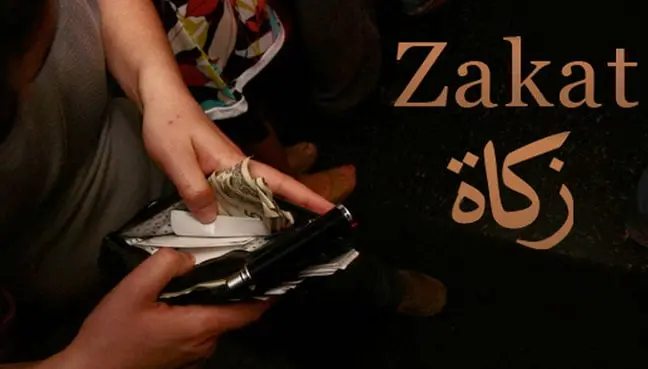
The Power of Shadaqa (Giving charity) in The Month of Ramadan
The best of sadaqah is given during the month of Ramadan. Narrated Ibn ‘Abbas: “The Prophet ṣallallāhu ‘alayhi wa sallam (peace and blessings of Allāh be upon him) was the most generous person, and he used to become more so (generous) particularly in the month of Ramadan…more generous than the fast wind in doing good” [Bukhari].
“Indeed, Allah the Exalted is the Giver, He love generosity and noble manners, He detest bad manners.” (Narrated by Al Baihaqi, classed sahih by Al Albani in ‘Shahihul Jami’, 1744)
In this hadith, we can infer that stinginess and tight-fisted are bad manners and are not the characteristic of manner of a true believer. Just as begging for alms is not the characteristic of a believer. But a believer is the open handed person, a lavish giver.
“Upper hand is better than the lower hand. The upper hand is the hand of a giver, and the lower hand is the hand of a beggar.” (Narrated by Bukhari in hadith no. 1429, Muslim in hadith no. 1033)
“Giving alms can erase sins just like water ceases fire.” (Narrated by Tirmidhi, classed sahih by Al Albani in Shahih At Tirmidzi, in hadith no. 614)
“A man who gives charitable gifts so secretly that his left hand does not know what his right hand has given.” (Narrated by. Bukhari in hadith no. 1421)
“Wealth will not be decreased by giving by giving charity. And a forgiving slave must be rewarded by Allah with authority.” (Narrated by Muslim, no. 2588)
“Verily those who give alms – be they men or women, -and give Allah a beautiful loan shall be repaid after increasing it many times; and theirs shall be a generous reward.” (Qs. Al Hadid/The Iron: 18)
Dua
One of the most generous blessings of the month of Ramadan is the opportunity of having our dua (supplications) accepted. It was narrated that the Prophet ṣallallāhu ‘alayhi wa sallam (peace and blessings of Allāh be upon him) said:
“There are three whose supplication is not rejected: (i) The fasting person when he breaks his fast, (ii) the just leader, and (ii) the supplication of the oppressed person; Allah raises it up above the clouds and opens the gates of heaven to it. And the Lord says: ‘By My might, I shall surely aid you, even if it should be after a while.’” [Jami` at-Tirmidhi]
“Dua (supplication) is worship” [Abu Dawud]
“The supplication is the essence of worship.” [Jami` at-Tirmidhi]
It is not the length of your dua that matters, but rather the meaning and intentions behind it that are of importance.

Mazharul Islam,
Corporate Legal Practitioner,
Member of Harvard Business Review Advisory Council.
He can be reached at mazhar@insightez.com